The Truth About Red 40: Why Your Hydration Drink Shouldn't Be Neon
The Truth About Red 40: Why Your Hydration Drink Shouldn't Be Neon
Let me ask you something. When you crack open a sports drink or tear into an electrolyte packet, why is it the color of a traffic cone? Or a highlighter? Or whatever shade of red suggests your beverage was mixed in a nuclear facility?
Here's a spoiler: hydration has no color. Water is clear. Sweat is clear. The electrolytes your body actually needs are white powders that dissolve invisibly. The neon is not for you. The neon is for the shelf.
What Is Red 40 and Why Is It Everywhere in Hydration Drinks
The Dye That Followed You From Childhood
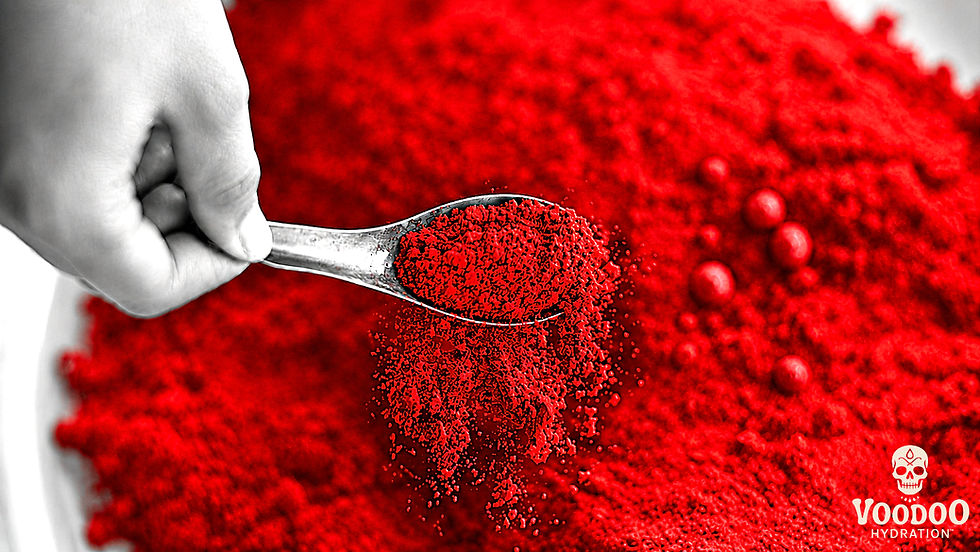
Red 40 — formally known as Allura Red AC — is a petroleum-derived synthetic dye used to make food and drinks look more appealing. It shows up in everything from candy to cereals to, yes, your "healthy" sports drink.
It is one of the most widely used artificial dyes in the American food supply, which is less a testament to its safety and more a testament to how good the food industry is at making things look delicious.
It costs almost nothing to add. It photographs beautifully. And it has absolutely zero nutritional or functional value in your body whatsoever.
Red 40 Side Effects: What the Research Suggests
The conversation around Red 40 side effects has gotten louder in recent years, and for good reason.
Here's what the science has flagged:
Hyperactivity and behavioral effects in children.
A landmark 2007 study published in The Lancet found a significant link between artificial food dyes — including Red 40 — and increased hyperactivity in children. The European Union took this seriously enough to require warning labels on products containing these dyes.
The label reads: "May have an adverse effect on activity and attention in children." The U.S. FDA reviewed the same study and... did not require the label. Make of that what you will.
Allergic reactions.
Red 40 is one of the more commonly reported triggers for allergic-type responses, including hives, itching, and in rarer cases, more serious reactions — particularly in individuals with aspirin sensitivity.
Gut health concerns.
Emerging research has begun examining the impact of synthetic dyes on gut microbiome composition. Early findings aren't flattering. Your gut bacteria, it turns out, did not evolve alongside petroleum-derived colorants and are not particularly thrilled about them.
None of this is settled science presented as a verdict. But "not settled" is doing a lot of work for an ingredient that does nothing except make your drink look like a prop from a superhero movie.
Synthetic Dyes in Sports Drinks: A Completely Unnecessary Problem
Why the Industry Keeps Using Them
The sports and hydration industry leans hard on visual cues to signal flavor and energy. Blue means cool and refreshing. Yellow means citrus. Red means fruit punch, berry, or "extreme." The color is marketing, not medicine. And because the average consumer has been trained since birth to associate bright colors with bold flavor, the cycle continues.
The irony is thick. You're buying an electrolyte drink because you want to take better care of your body. You're trying to replace what you lost, fuel your next effort, recover smarter. And tucked right into that "healthy" choice is a synthetic dye with a growing list of questions around it.
Artificial Colors in Sports Drinks: The Label Math
Flip over a mainstream sports drink and look for the ingredient that does the heavy visual lifting. You'll find Red 40, Blue 1, Yellow 5, or Yellow 6 — sometimes in combination, because one synthetic dye apparently wasn't enough.
These are not trace amounts hiding at the end of the list. Some formulations use dye concentrations high enough that the drink stains the bottle cap.
If it stains the bottle cap, it's probably doing something interesting to your insides too. Just a thought.
What Clean Color Actually Looks Like
How Voodoo Gets Its Color Without the Chemistry Lab
When we built Voodoo Hydration, artificial dyes were a hard no from day one. Not because of optics or marketing positioning, but because there is genuinely no reason to put them in a product designed to help people perform and recover.
Here's how our flavors get their color:
Blood Berry gets its light red hue from cranberry powder. That's it. An actual fruit. In a drink designed for humans. Shocking.
Possessed Peach uses beetroot juice and beta-carotene — both naturally derived, both doing double duty as color and mild antioxidants.
Soulless Citrus uses beta-carotene for its warm tone — the same compound that makes carrots orange and sweet potatoes worth eating.
Bones Only, our unflavored formula for the purists, has no color added at all because it doesn't need any.
None of our colors came from a petroleum refinery. None of them require a warning label in the EU. And none of them are trying to trick your brain into thinking the drink tastes better than it does.
The Worker's Case for Clean Hydration
Your Body on the Job Doesn't Need the Extras
This matters beyond the gym. If you're someone who works a physical job — construction, landscaping, warehousing, healthcare, any trade that leaves you drenched by noon — you're already putting enough stress on your body without your hydration drink adding unnecessary synthetic chemistry to the list.
You need potassium. You need magnesium. You need sodium, calcium, and phosphorus replaced at functional levels. You need Vitamin C for recovery. You do not need a dye derived from petroleum to make your water look like a lava lamp.
Clean hydration is not a luxury category. It's just what hydration should have been the whole time.
The Bottom Line on Red 40
Synthetic dyes in drinks are not a scandal — they're just a choice. And like most choices, they reveal priorities. When a company puts Red 40 in your electrolyte drink, they're telling you the color of your drink matters more to them than what's in it.
We disagree.
Your drink doesn't need to be neon to work. It doesn't need to photograph well to hydrate you. It needs the right electrolytes, in the right amounts, with nothing in there that your body has to work around.
That's what Voodoo is. Nothing glowing, nothing synthetic, nothing that requires a disclaimer in Europe.
Just hydration, doing its job.
The Truth About Red 40: Why Your Hydration Drink Shouldn't Be Neon


Comments